Armors
Armors provide blockchain code auditing, security testing, monitoring, and alarming services.




What is Armors?
Armors is a blockchain security firm founded in 2017 that provides code auditing, penetration testing, cross-chain migration, and platform security services. Armors has established in-depth cooperative relationships with exchanges such as OKEX, Binance, Bybit, Huobi, Bitfinex, Kucoin, MXC, Bibox, and others. In addition to smart contracts in Solidity and Rust, Armors has conducted in-depth research and mastered the Move language, adding Move audit capabilities to protect project assets. Armors is an audit partner of BSC, Ethereum, Polygon, Solana, and other public chains. It has provided services for over 2,000 blockchain projects and protects digital assets worth more than 100 billion US dollars. The Armors audit process: (1) Evaluate the smart contract (2) Pay (3) Audit the smart contract (4) Deliver the audit report on time. If any issue is found during auditing, Armors will notify you and suggest modifications promptly.
Web3 dapps and developer tools related to Armors
Discover blockchain applications that are frequently used with Armors.
 Web3 Antivirus
 GoPlus Security
 Blockaid
 SecureWatch

Developer resources from Alchemy
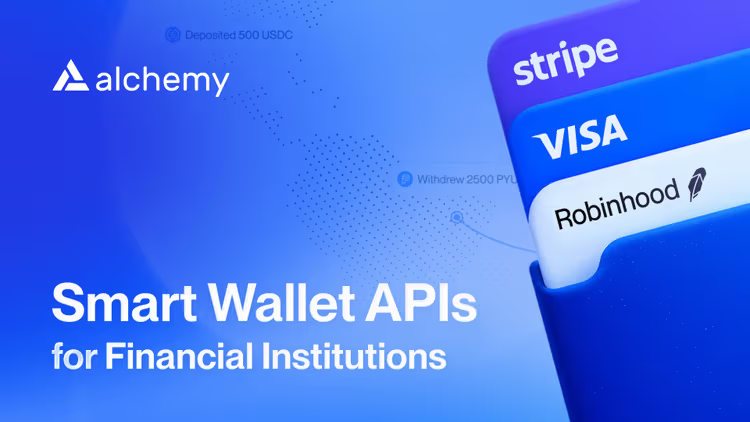
Smart Wallet APIs for financial institution requirements
The stablecoin market has surged to over $240 billion and is projected to hit $2 trillion by 2028. Major banks are launching stablecoins while Congress passed the GENIUS Act. Smart Wallet APIs help financial institutions integrate onchain
Alchemy powers Solana Developer Platform
Alchemy is a founding node infrastructure partner for Solana Developer Platform (SDP), the Solana Foundation's new API-driven platform for enterprises and financial institutions building onchain.
How Slash built stablecoin banking with smart wallets
How Slash uses smart wallets to power gasless stablecoin banking for 3,000+ businesses globally
Armors alternatives
Explore web3 competitors and apps like Armors.
 Sherlock
 CertiK
 Salus
Salus QuillShield
App store listings are independently reviewed and written by Alchemy using a combination of inbound submissions, editorial research, public project sources, and third-party directories, including ecosystem data from The Grid under the Open Database License, DefiLlama, DappRadar, Reown, and chain ecosystem pages.