Launching Support for the Polygon PoS Amoy Testnet
Author: Sameena Shaffeeullah
We are excited to announce support for Polygon Amoy, a Sepolia-based test network for the Polygon Proof-of-Stake (PoS) blockchain.
On January 12, Polygon announced the Amoy testnet as an alternative to Polygon’s Mumbai testnet. When Ethereum deprecates the Goerli testnet, Mumbai will also be deprecated.
We encourage all developers to migrate to the Polygon Amoy testnet as it will be the sustainable path forward for all testing and development needs.
Note: All features supported by Alchemy on Mumbai are also supported on Amoy.
Required steps to migrate to amoy
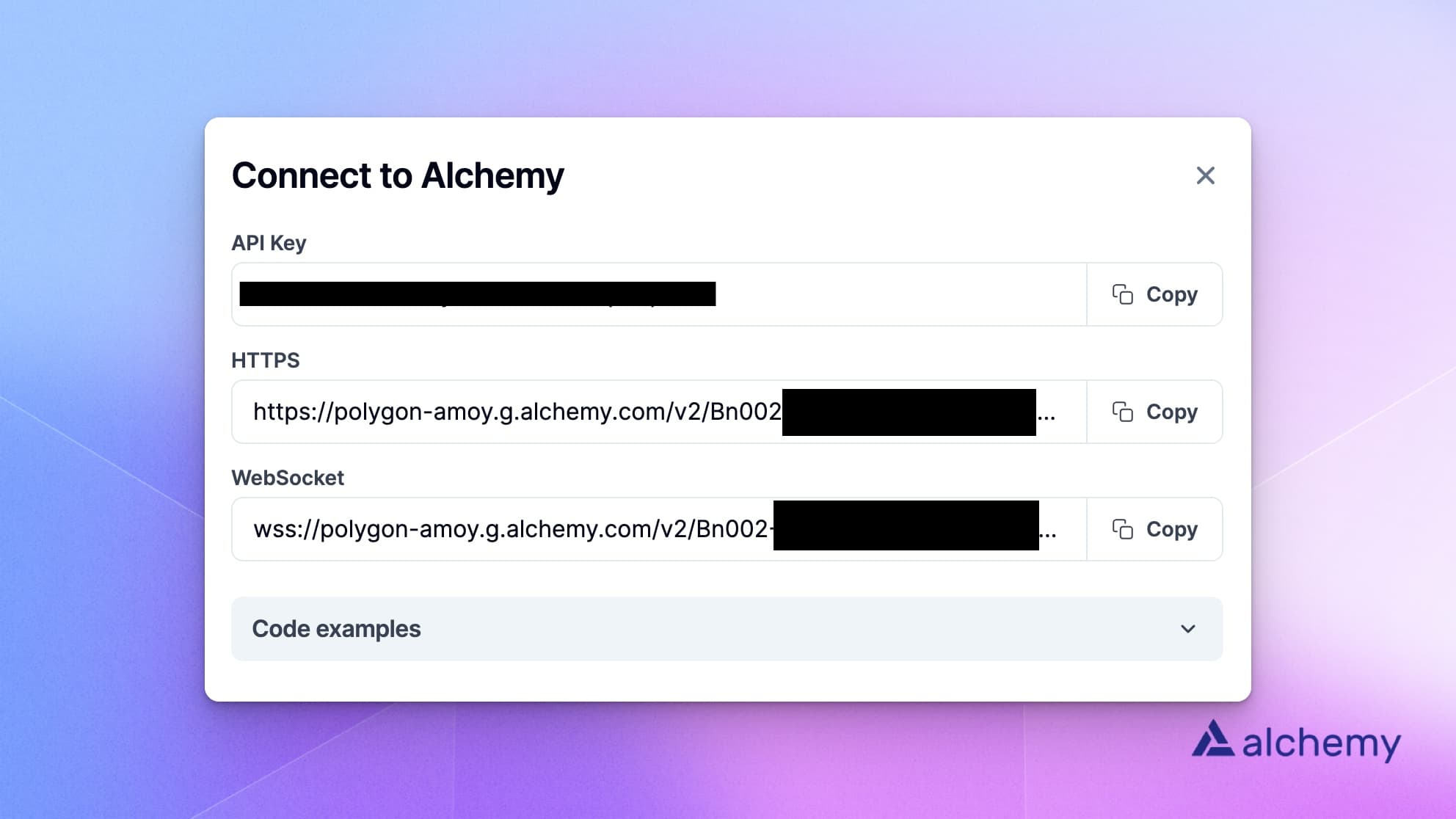
Follow these 5 steps to migrate from Mumbai to Amoy:
- Create a new app from the Alchemy dashboard on the Polygon Amoy network.
- Get free Amoy tokens from Alchemy's public Amoy Faucet which drips up to 1 Amoy MATIC per day.
- Change your
API\_URLto your Amoy RPC URL:https://polygon-amoy.g.alchemy.com/v2/\[YOUR-API-KEY\] - Deploy your test contract to Amoy.
- Change your tests to use the new contract.
For more detailed instructions, please reference the "How to Deploy a Smart Contract to the Sepolia Testnet" tutorial on our docs.
Alchemy Newsletter
Be the first to know about releases
Sign up for our newsletter
Get the latest product updates and resources from Alchemy
By entering your email address, you agree to receive our marketing communications and product updates. You acknowledge that Alchemy processes the information we receive in accordance with our Privacy Notice. You can unsubscribe anytime.

Related articles

The Cortex router: how we pick the fastest healthy node for every request
Getting a request to a nearby region is table stakes. What happens next, choosing which node answers, is where Cortex does its work.
Best blockchain infrastructure for AI agents (2026)
Compare the best blockchain infrastructure for AI agents in 2026: agent frameworks, agent-ready RPC and data providers, and the standards that connect them.
Set up Claude Code with Alchemy in 60 seconds
Connect Claude Code to Alchemy with one command. Your coding agent gets live data across 100+ chains: prices, balances, NFTs, transfers, and simulation.